
Sealants
Silicone and expansion joints for Dubai projects — installed, inspected, repaired
Failed, missing or non-conforming sealant is a weatherproofing defect that holds handover open. M&M installs, inspects and repairs silicone and expansion joints to the standard proven on Australian tier-1 towers, airports and metro stations — now available to Dubai projects.
What it is
The scope, done right
M&M Services Group is an Australian facade and surface rectification services group with 25-plus years in the trade and 90-plus skilled staff. Our silicone teams install, inspect and repair weather seals, movement joints and large expansion joints, documented at every stage through inspection and test plan (ITP) records and time-stamped images. That capability — proven at Western Sydney International Airport, One Sydney Harbour, One Circular Quay and Sydney Metro stations — is now delivering on Dubai projects.
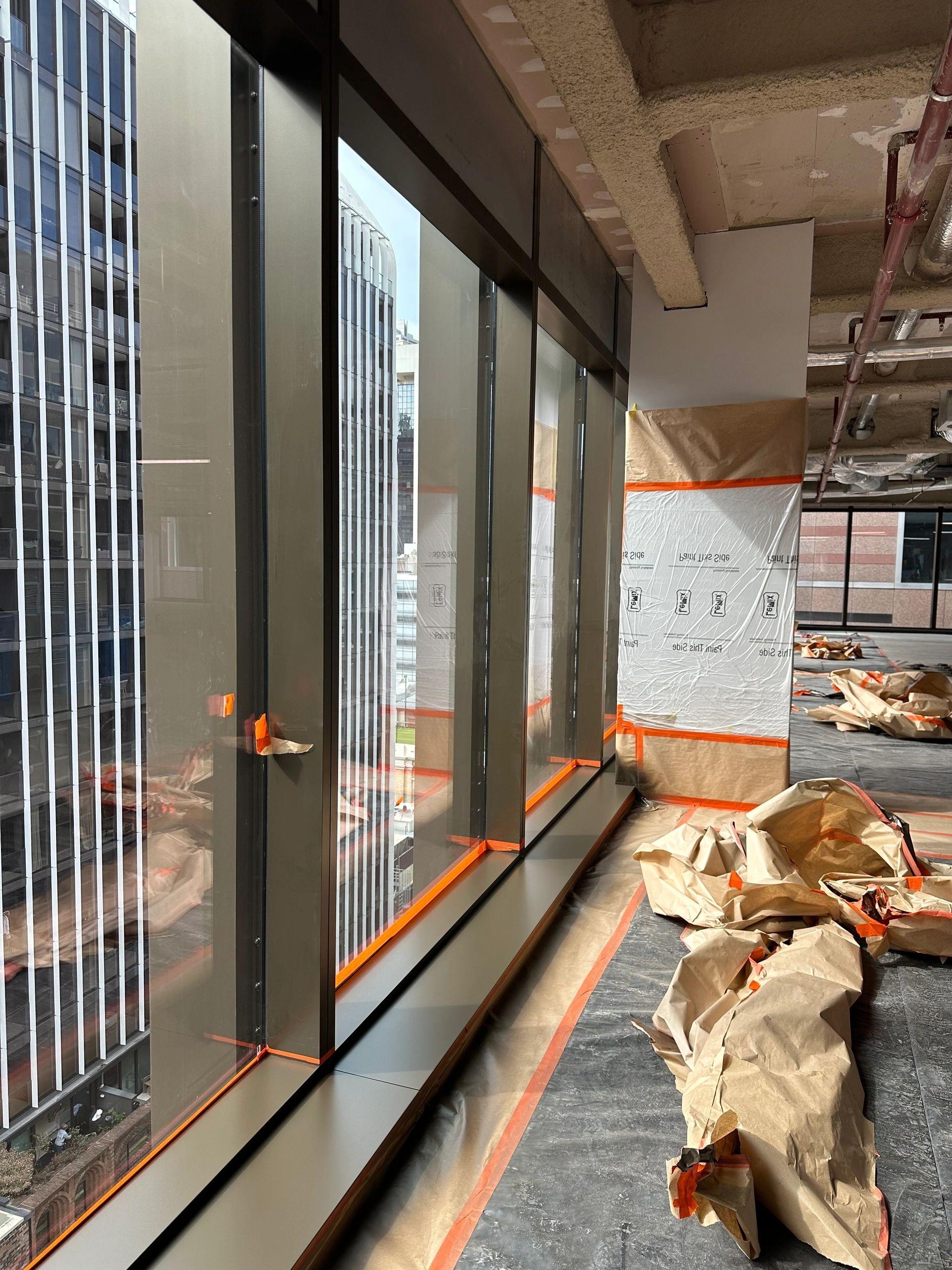
Caulking and silicone is the wet-seal trade that keeps water out of a building. On a facade, a joint is the last line between the weather and the interior — and one of the first things inspected at handover. We install, inspect and repair the full range of joints a modern tower carries: perimeter weather seals to windows, doors and curtain wall; movement and expansion joints between facade panels; and the fine glazing seals around glass balustrades and frameless assemblies. Small joints and large expansion joints are detailed for the movement they have to absorb, not simply filled.
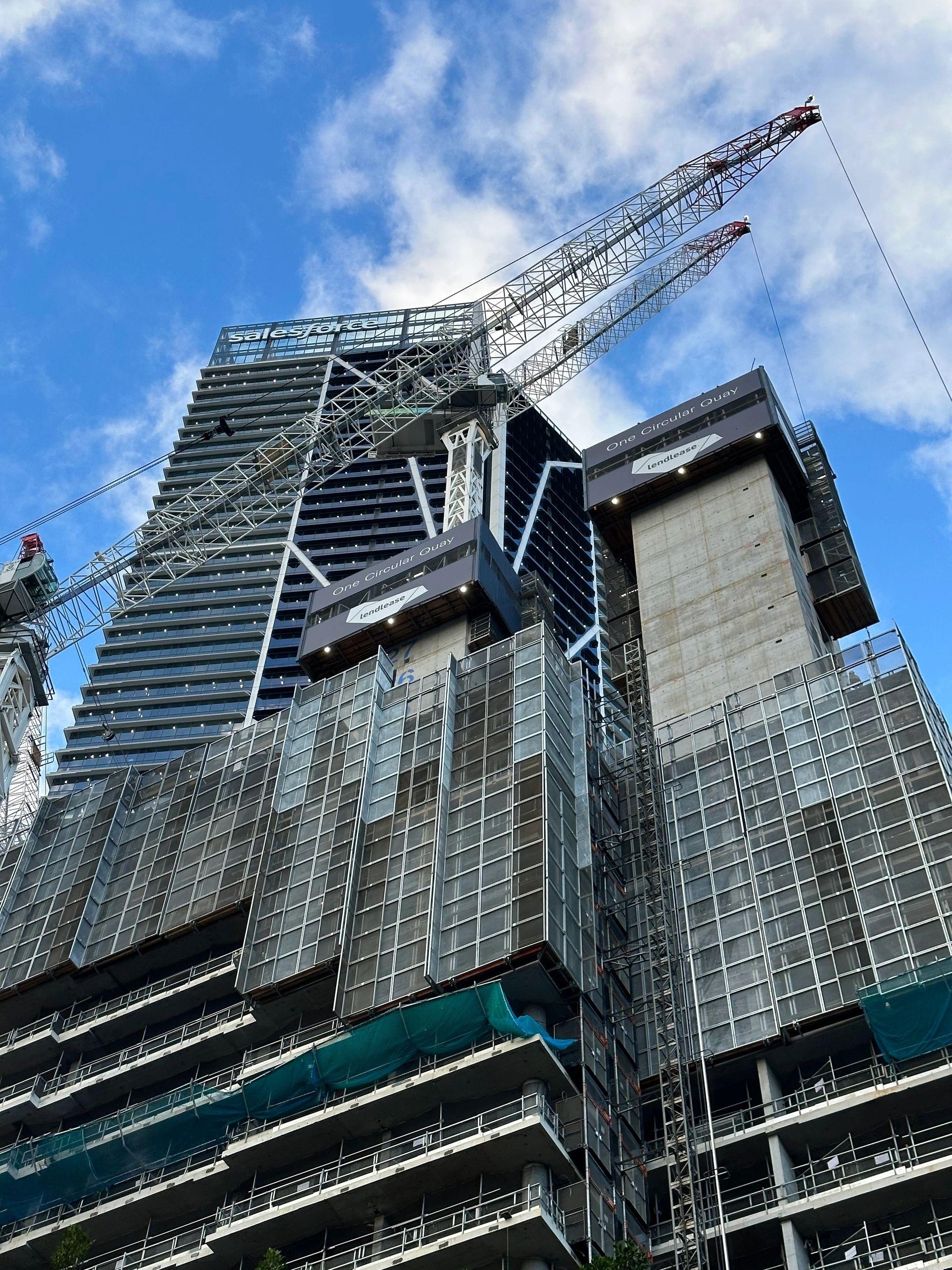
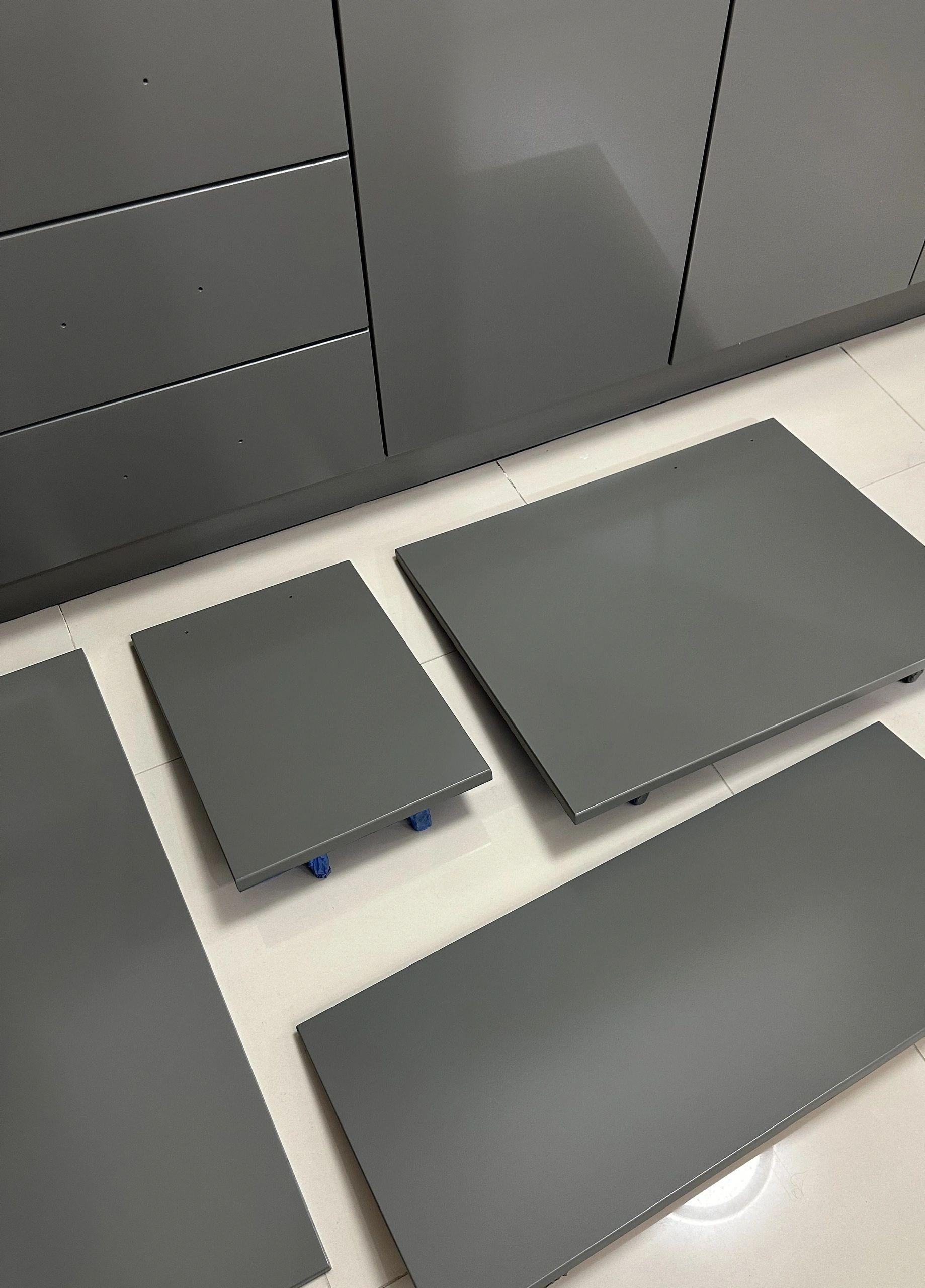
The proof sits in Australian tier-1 delivery. Our teams sealed the silicone joints around the glass balustrades at Western Sydney International Airport, and delivered silicone and sealant works at One Sydney Harbour, One Circular Quay and Sydney Metro stations — projects run under the documentation discipline, quality scrutiny and immovable programmes that tier-1 Australian construction demands. Across 25-plus years, formerly as M&M Spray Painting, the company has grown to more than 90 skilled staff across Australia — the track record now available to Dubai's main contractors and facade companies.
Before mass application the joint is proved — the right sealant for each substrate, the right joint design, and, where the joint is visible, an on-site colour match to the adjacent finish. Every run is recorded against an inspection and test plan (ITP), with live project records and time-stamped images available to the client through OneDrive. On Dubai works, methods and acceptance points are set against the project specification and applicable UAE requirements.
Much of that Australian work was done on coastal high-rise facades exposed to sun, salt and weather — relevant experience for the demands a Gulf facade places on a sealant joint. Where access at height is required, the access method and its interfaces are confirmed separately for the project; day and night shifts are available to suit the agreed sequence.
For a main contractor or facade company in Dubai, the offer is a single accountable scope. Silicone sits alongside M&M's facade rectification, glass restoration and coatings trades, so a mixed defect list can be reviewed under one engagement and one set of documentation. The Australian company brings its documented methodology and quality controls to each agreed Dubai package.
What's included
Everything this scope covers
- Installation of new silicone weather seals to windows, doors and curtain wall
- Inspection and condition assessment of existing silicone and sealant joints
- Repair, cut-out and re-seal of failed or non-conforming joints
- Small joints and large expansion / movement joints
- Perimeter weather seals and internal wet-area joints
- Silicone joints around glass balustrades and frameless glazing
- Joint design correction — width-to-depth ratio, backer rod and bond breaker
- Substrate-appropriate sealant selection (glass, powdercoated and anodised aluminium, stainless, stone, concrete, precast, timber)
- Substrate preparation, priming where required, and correct tooling
- On-site colour match of visible joints before mass application
- Day and night shifts and surge labour for large or live-facade re-seals
- ITP documentation, live project records and time-stamped images via OneDrive
What this fixes
The handover risks this scope removes
Weatherproofing defects blocking close-out
A failed or missing perimeter seal is a water-ingress defect that holds an elevation open. Getting the joint conforming and documented is often what stands between the programme and practical completion.
No record of what was installed and when
When a joint has to be revisited, time-stamped, documented records show exactly what was installed and when — a complete quality-assurance history rather than guesswork.
Multi-trade coordination on facade defect lists
Balustrade and facade snags rarely arrive as one trade. Sealant, glass, stainless and coatings on the same defect list can be closed by one crew under one agreed package instead of three separate subcontractors to coordinate.
Rework and access cost after scaffold-down
A joint applied over a poor substrate or at the wrong width will re-fail once access is gone. Proving the joint before mass application avoids a return visit at height during the defects liability period.
How we do it
A documented method, every time
Survey and joint assessment
Walk the elevation or area, identify joint types (weather seal, movement joint, expansion joint, wet-area), record the substrates on each face, and log failed, missing or non-conforming runs against location — the basis of the ITP and the handover record.
Sample, sealant selection and colour match
Confirm the correct sealant chemistry for each substrate pairing (including where a primer or neutral-cure product is required), size the joint correctly, and — for visible joints — achieve an on-site colour match to the adjacent finish before any bulk application.
Method statement and ITP
Set out the approved methodology, hold points and inspection criteria in an inspection and test plan, agreed with the Engineer so the sign-off standard is clear before work starts.
Preparation and execution
Clean and dry the adhesion surfaces, install backer rod or bond breaker so the sealant flexes correctly, prime where specified, then apply and tool the joint within the material's working conditions — run on day or night shift, with surge labour where the programme demands it.
QA and documentation
Record each completed run with time-stamped images and live project documentation against the ITP, and make the record available to the builder through OneDrive for review at any time.
Inspection and sign-off
Present the documented joints for Engineer's inspection and close them out, leaving a complete quality-assurance record that stands behind the work through the defects liability period.
Why it holds up
Evidence, not assurances
Install, inspect and repair — one accountable trade
The same team that runs the joint stands behind it through the defects liability period, rather than a supply-only installer who has left site.
Substrate-correct, not one-tube-fits-all
Sealant chemistry, priming and joint design are selected for each substrate pairing — glass, coated and anodised aluminium, stainless, stone, concrete and timber are each detailed differently.
Proved before mass application
The joint is confirmed — and, where visible, colour-matched to the adjacent finish on site — before the bulk of the work goes in, so the elevation is right the first time.
Documented for sign-off
ITP documentation, live records and time-stamped images via OneDrive give the Engineer quality-assurance evidence to close the joint and the builder a complete record of every run installed.
Day and night shifts with surge labour
Large re-seals and live-facade repairs can be sequenced around other trades and around operating hours, drawing on additional labour when the programme needs it.
Part of one agreed finishing package
Caulking sits alongside facade rectification, glass, stainless and painting under one agreed package — a mixed defect list, one point of accountability.
Proof
Case studies featuring this service
One Sydney Harbour
Barangaroo, Sydney NSW
One Circular Quay
Circular Quay, Sydney NSW
Western Sydney Airport (WSI)
Badgerys Creek, Western Sydney NSW
Dubai service areas
Popular areas for silicone services
Start with a local scope page, or send us the site address and we will confirm coverage.
Questions
What builders ask us
Projects in safe hands