Retail & Mixed-Use · Completed
Sydney Fish Market
Blackwattle Bay, Sydney NSW · Delivered in Australia
The new Sydney Fish Market sits on the water at Blackwattle Bay, a short distance from the Sydney CBD. It is a major waterfront market building and public destination on the harbour's western edge.
It belongs to the retail and mixed-use sector, where finishing standards are set by the public rather than by back-of-house tolerances. Everyone who walks through it reads the facade at close range from the day the doors open, so the envelope has to arrive at handover clean, free of the marks and damage ordinary construction traffic leaves on a facade this size.
The project
What it is
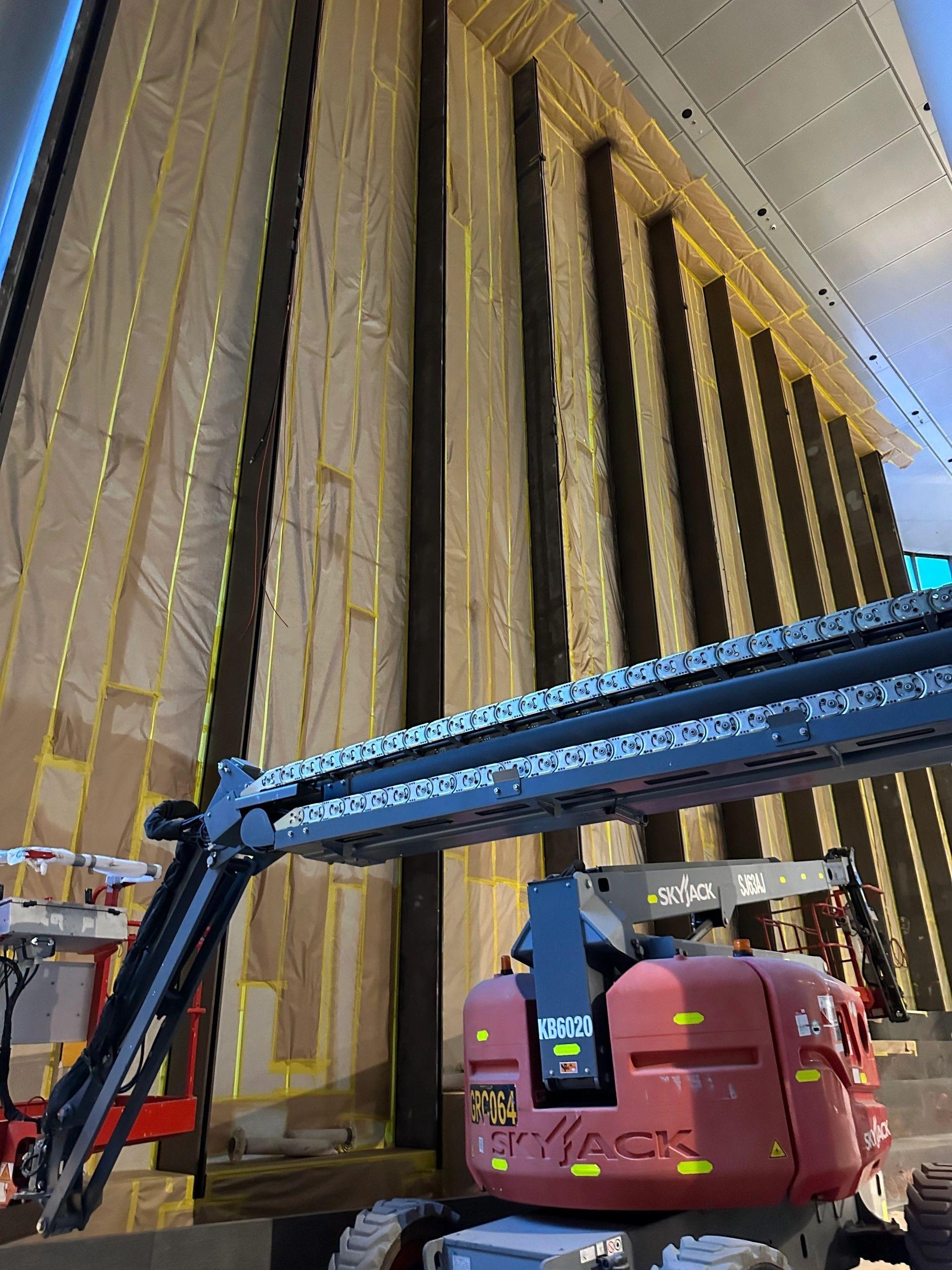
The project M&M was engaged on is the facade rectification scope for the new market building at Blackwattle Bay. A building of this scale carries a large facade envelope, and every panel on it passes through transportation, handling and installation before it is signed off. Along the way panels get marked, scratched and knocked — sometimes through the facade trade's own handling, often through works by other trades moving around them once the panels are up.
On a public building, a damaged facade panel is a visible, permanent defect in plain view of everyone who uses the building, and it stands between the builder and a clean handover. The default remedy — taking the panel down and reordering a replacement — is slow and costly, and on a facade that is already installed it can mean disturbing surrounding work that has otherwise been completed.
Facade panels can be finished in powdercoat, anodised or steel systems, and each behaves differently under damage and repair. None of them is corrected properly with a spray-can touch-up. The finishing challenge on a building of this profile is to bring damaged panels back to the specified finish in place — to a standard that reads as new at close range, across whichever substrates are on the facade.
Our scope
What M&M delivered
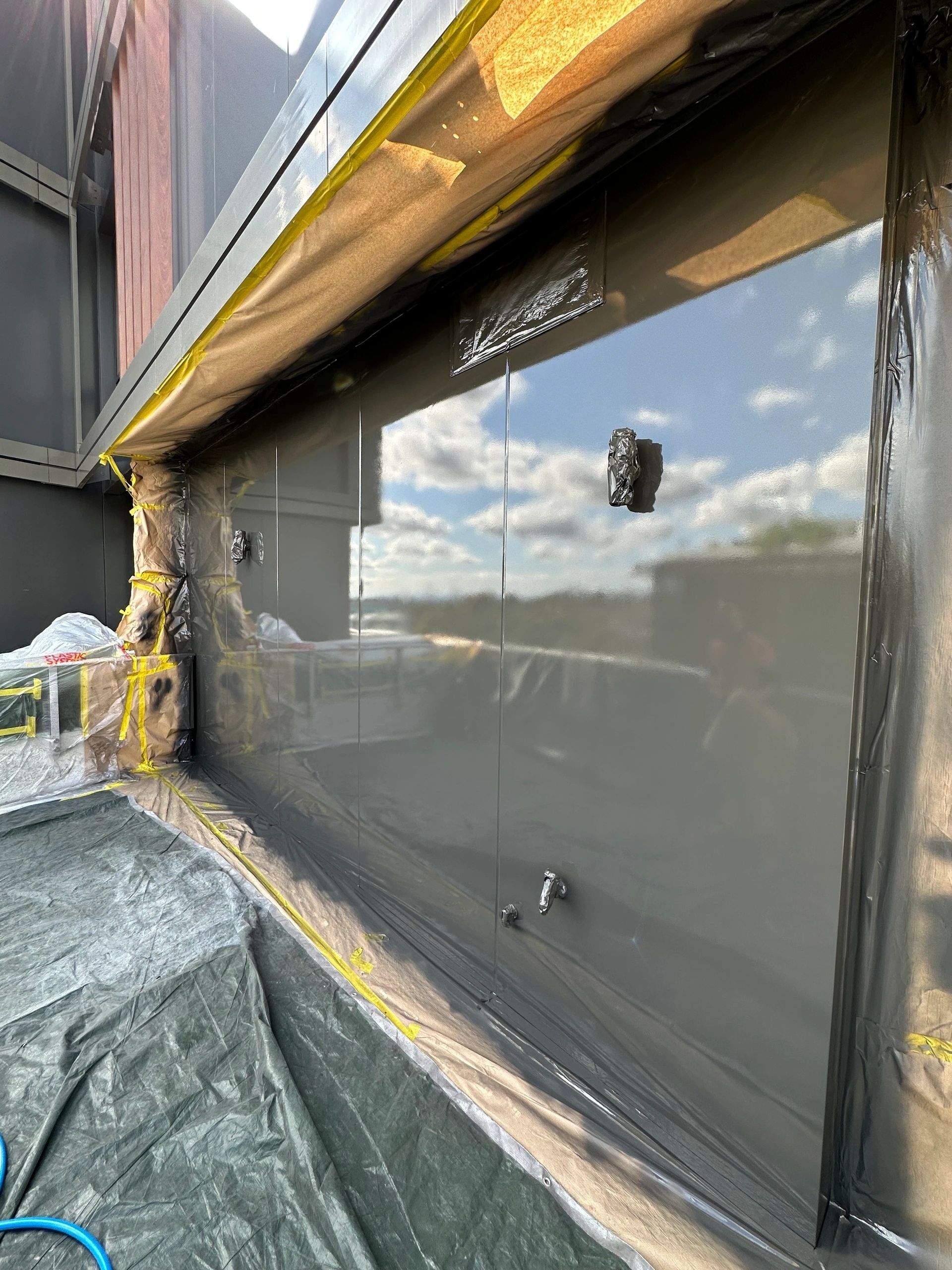
M&M delivered facade panel rectification: restoring panels damaged through transportation, installation and works by others, using procedures developed to meet industry and client standards. The method is built around restoring the panel in place rather than pulling it down and reordering it — the difference between closing a defect and reopening completed facade work.
The rectification capability covers the three named facade substrates — powdercoat, anodised and steel — each with its own approach. As standard, the finish is achieved with enclosed-area painting of polyurethanes and acrylics rather than spray-can touch-ups, which is what allows a repaired panel to hold a finish quality that matches the surrounding facade. Colour is matched on site before any mass application, so the corrected panel sits within the run rather than standing out from it.
The work is carried out by project-specific trained tradespeople under quality-control managers, with the capacity to increase labour at any given point to keep pace with the programme. Rectification runs alongside time-stamped photographic documentation and live project records available to the client — the standard paper trail M&M attaches to this scope, capturing the condition of each panel and the work done to it.
The value
Why it matters
On a public building, the facade is the finish everyone sees, and a marked or scratched panel is a defect that does not go away on its own. Restoring the panel in place, to standard, keeps the facade moving towards practical completion rather than waiting on replacement panels and the disruption that reinstalling them brings. On a programme where the envelope has to be signed off, that is the difference between a line item and a hold-up.
The documentation matters as much as the finish. Time-stamped photographs record the condition of each panel and the surrounding work before and after rectification, giving the builder a complete, traceable account of the scope through close-out, not just the appearance of the finished facade.
And restoring finishes in place, rather than replacing them, keeps the replacement budget in the builder's pocket. Handing the facade rectification scope to one accountable team — one point of coordination for damaged panels across the envelope — removes a piece of the multi-trade management that would otherwise sit with the head contractor.
Services on this project
More in this sector
More retail & mixed-use work
Projects in safe hands